Reviews

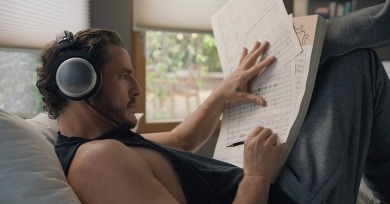
He is ultimately less invested in resolving the tiresome debate about how much lived experience belongs in fiction than he is in dissecting his late style and interrogating the artistic ambitions that have mutated and metastasized during the so-called winter of his career.
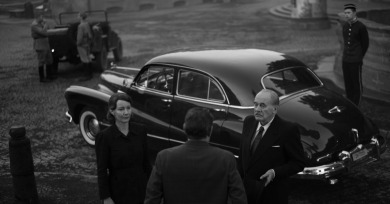
Pawlikowski mines postwar architecture for a pathetic fallacy. His wanderers seem to exist in a molecular relationship with their vacated milieus, which are an extension of their inner lives.
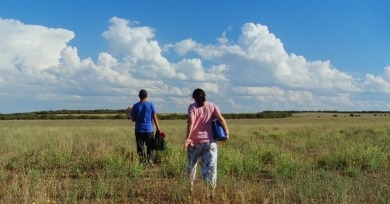
As the film unfolds, we are gradually confronted with a possibility that La Libertad raised but did not explore, that is, of a dramatic rupture, a decisive break in routine.
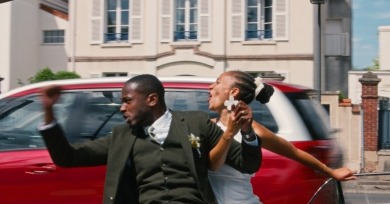

Equally indebted to Magnolia and Dreamgirls, Misty Green strives to be a multi-faceted character study revealing the dark underbelly of Los Angeles, where artistic ambitions run up against financial need.

In their marvelous new screen adaptation of Mrs. Dalloway, Arie and Chuko Esiri allow Clarissa Dalloway to remain an enigma even as they update and enhance the sociohistorical context that gives her life.
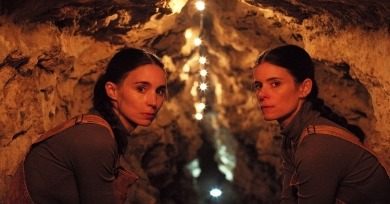
Unfolding in more or less discrete chunks, Bucking Fastard plays like a kind of exquisite corpse, its genus uncertain.
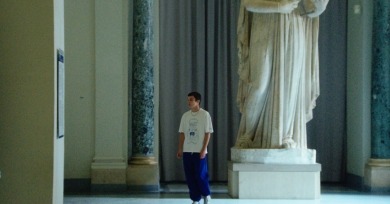
As distractingly writerly as the extended conversations may be, the teens are a convincing social organism; the way they speak, walk, or even just lounge together to take in a lesson as if they’ve all truly known each other for years.
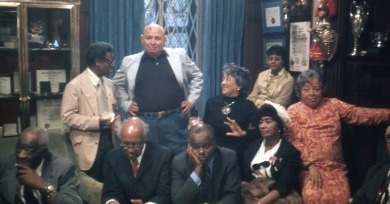
They discuss and debate the impact of the Harlem Renaissance, returning again and again to the relationship of art development and political struggle, as if orbiting around the topic might pull them closer to a definitive truth hovering just out of reach.
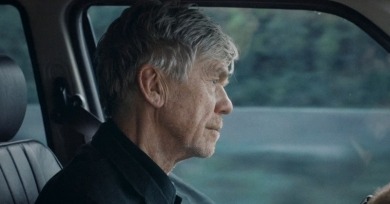
The film conjures the magical highway consciousness of a thousand unknowable stories running parallel to one another, heartbreakingly circumscribed by the Autobahn lanes, and, here, the rigid camera angles and disciplined structural approach.
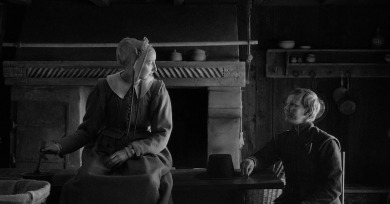
Schleinzer immersed himself in hundreds of known instances across centuries in which women became men for any number of reasons. The character of Rose is thus a composite figure, borne of this exploratory process but not beholden to the facts and figures of a single history.

Clashes between culture, craft, perception, and ego are the film’s droll MO, part and parcel of writer-director Nicolás Pereda’s deadpan and desiccated style.
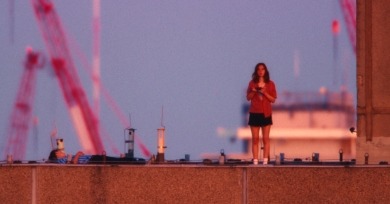
Perhaps Everytime feels so elusive because it is most vividly recalled as a collection of details. There are about a half-dozen Big Images; they are formally audacious, given ample lead-up and thematic weight. But it is the smaller moments that take up residence in memory.